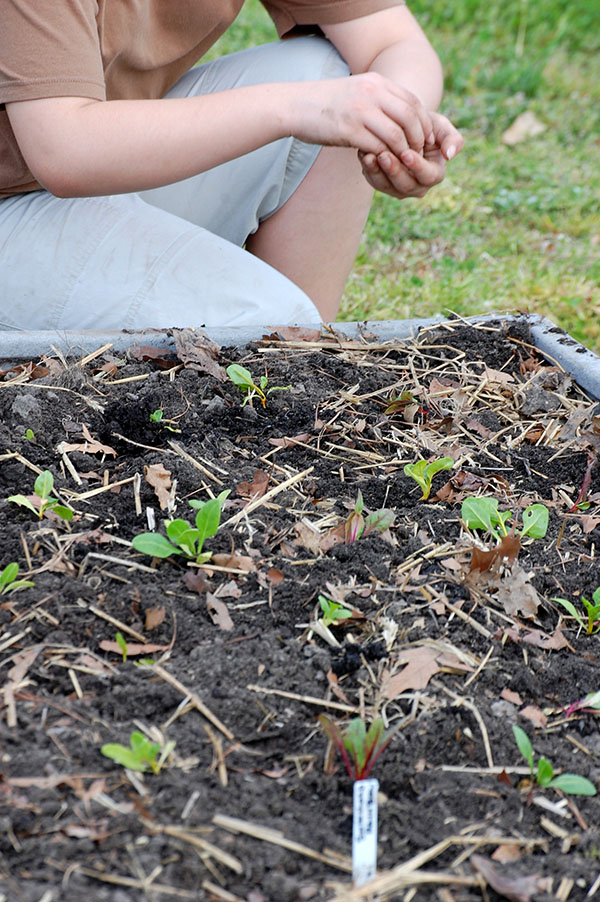
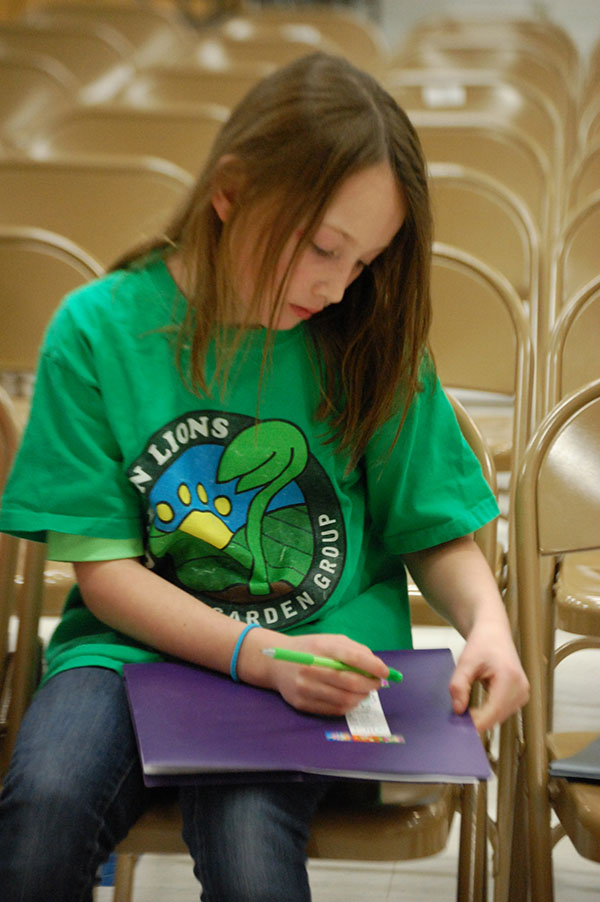
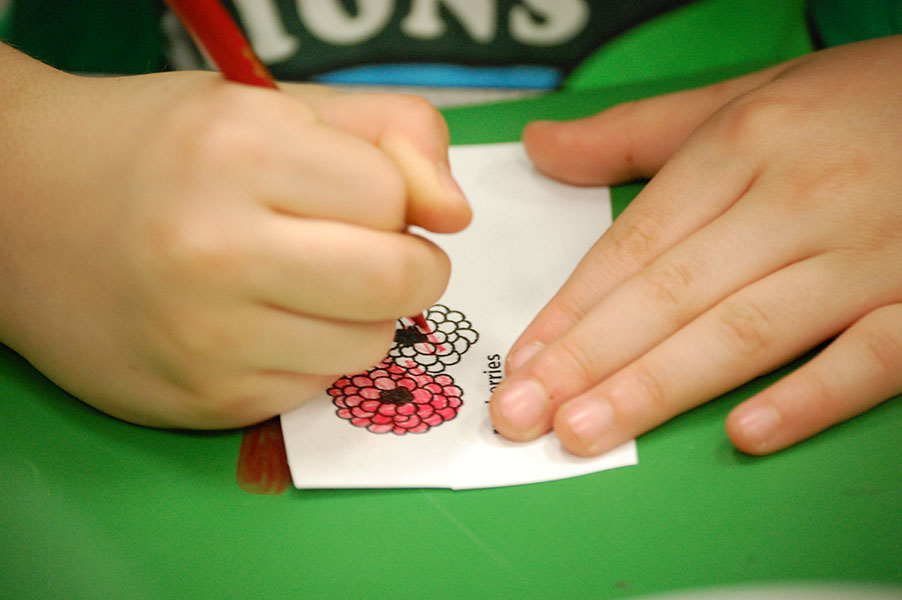
In March and early April the Green LIONS Garden Group was busy preparing the garden for Spring by starting seeds, weeding and giving new plants and seeds homes in our garden beds.
We were excited to welcome Linkhorn Park parent Becky Devlin of Roost Flowers to a meeting in March. She talked with the students about the importance and benefit of having flowering plants in and around an edible garden. Not only do they attract pollinators to the garden helping the flowers of edible plants turn into vegetables and fruits, but they can also deter certain pests from invading the garden. Ms. Devlin helped the students start zinnias seeds in the courtyard greenhouse. Once the seedlings started to emerge, Ms. Manley’s 3rd grade class adopted the plants to grow stronger in the Grow Lab in their classroom. We look forward to planting them in the LIONS Garden when they’re ready.
Ms. Devlin raises beautiful flowers and herbs to beautify weddings and events using organic growing methods. You can learn more about her business at Roost Flowers.
Next we spent a meeting in the garden weeding the beds of residual plants and weeds from our fall planting. We removed the layer of leaf mulch that kept the beds warm over the winter and tucked it in around our blueberry bushes to help them grow stronger.
At this same meeting we made carrot seed tape to help plant our carrots without the need of thinning the plants later. We made a simple “glue” by boiling cornstarch with water and glued carrot seeds carefully spaced on paper towels. If the seeds germinate properly after planting the paper towel tape as a strip they will grow uncrowded and perfectly spaced, eliminating the usual task of thinning the carrot growth.
Now we were ready for a visit from Farmer John and to plant our garden beds with delicate spring vegetables and herbs. We amended our soil with compost giving it the equivalent of an energy drink with a huge vitamin boost. We planted some plants from seed and some as seedlings.
By seed, also known as direct sow, we planted sugar snap peas, turnips, potatoes, carrots, radishes, sunflowers, nasturtiums (edible flowers), mesclun mix (baby lettuces), spinach, one variety of lettuce, spring onions, cilantro and dill. As seedlings we planted lettuce, tatsoi, kale, arugula, chard, snapdragons, a variety of herbs including chervil, yarrow, thyme, lavender, mint, chives, and many more that I know I am forgetting. Visit the garden to see the wide variety of our vegetables, herbs, flowers, and our perennial strawberries already producing the white flowers that will soon become ripe, juicy strawberries. Yum!
Saturday, April 20, 2013
Friday, March 8, 2013
Food Miles Over Carb Grams?
As a society first we counted the calories in our food, then fat grams, then carbohydrate grams. Now the miles our food has traveled is topping that list. At least it is at the top of the list for the students in the Green LIONS Garden Group. They are studying the importance of eating fruits, vegetables and other products grown and produced in season by local growers and producers. They are learning to ask questions such as: What was the last thing I ate? Who grew and harvested it or some of the ingredients in it? How does how it was grown or produced affect the earth? How many miles did it travel to reach the store where I bought it?
Students explored the 24 steps we determined it could take to bring pizza sauce to your house to make a pizza. The steps, written on cards, were shuffled and passed around a circle. Starting with the first step students tossed a ball of yarn around after holding to it when their number came up. The yarn formed a large entangled web showing the elaborate trip pizza sauce may take to your house.
We discussed how much smaller that web could become if we bought tomatoes from a local farmer and made the sauce ourselves. The students holding the steps that could be eliminated then let go showing a clear difference in the shrinkage of the web, an impactful example of how we have the power to make choices that matter in our food purchasing decisions.
Our current global food system provides us with an immense variety of foods any time of the year. Sadly this system also takes a toll on our environment, local economies, communities, farmers, consumers and how our food tastes. Food travels farther today more often and this makes us further and further removed from our food sources. What used to feel like having endless choices now feels like we have less and less control over what we eat and how it is grown.
Students learned about eating seasonally and how to make choices to only eat some foods when they’re in season. We divided up into four groups and created an Eating Seasonally and Locally display to hang in the school cafeteria for the whole student body to enjoy. They were also able to take home a Local Food Wheel to share with their families when they make food choices.
By choosing to eat locally and seasonally we gain a voice in our community about how our land gets used, what pollutants end up in our local waters and soils, and the physiological and economical health of our community. Locally grown, seasonal produce tastes better and is better for us because it is usually eaten sooner after harvest than food that has traveled 100s and 1000s of miles. Simply reducing the amount of fruits, vegetables, and other products grown or produced outside of our region we consume can make a significant impact on the health of our planet now and for years to come.
Print out your own complimentary Local Food Wheel as pictured below by going to our GLGG Files and opening both Local Food Wheel Pg 1 and Pg 2. Take it with you to the grocery store or farmer’s market to find fresh, seasonal produce.
Students explored the 24 steps we determined it could take to bring pizza sauce to your house to make a pizza. The steps, written on cards, were shuffled and passed around a circle. Starting with the first step students tossed a ball of yarn around after holding to it when their number came up. The yarn formed a large entangled web showing the elaborate trip pizza sauce may take to your house.
We discussed how much smaller that web could become if we bought tomatoes from a local farmer and made the sauce ourselves. The students holding the steps that could be eliminated then let go showing a clear difference in the shrinkage of the web, an impactful example of how we have the power to make choices that matter in our food purchasing decisions.
Our current global food system provides us with an immense variety of foods any time of the year. Sadly this system also takes a toll on our environment, local economies, communities, farmers, consumers and how our food tastes. Food travels farther today more often and this makes us further and further removed from our food sources. What used to feel like having endless choices now feels like we have less and less control over what we eat and how it is grown.
Students learned about eating seasonally and how to make choices to only eat some foods when they’re in season. We divided up into four groups and created an Eating Seasonally and Locally display to hang in the school cafeteria for the whole student body to enjoy. They were also able to take home a Local Food Wheel to share with their families when they make food choices.
By choosing to eat locally and seasonally we gain a voice in our community about how our land gets used, what pollutants end up in our local waters and soils, and the physiological and economical health of our community. Locally grown, seasonal produce tastes better and is better for us because it is usually eaten sooner after harvest than food that has traveled 100s and 1000s of miles. Simply reducing the amount of fruits, vegetables, and other products grown or produced outside of our region we consume can make a significant impact on the health of our planet now and for years to come.
Print out your own complimentary Local Food Wheel as pictured below by going to our GLGG Files and opening both Local Food Wheel Pg 1 and Pg 2. Take it with you to the grocery store or farmer’s market to find fresh, seasonal produce.
Thursday, February 14, 2013
Waste Not Want Not
The Green LIONS Garden Group studied the waste cycle at our last meeting learning that our actions have consequences in how we choose to throw items away. We discussed how landfills work and what we can and should not put in them. Learning of the chance of run-off into our drinking water allowed the students to determine what was safe to decompose in a landfill and what alternatives are available for re-purposing or recycling.
Did you know it can take up to 400 years for a plastic bottle to decompose in a landfill?! Students learned this surprisingly sad fact, opening up a discussion to how we could create waste-free lunches using re-usable or recyclable containers and accessories. Students learned they can use cloth napkins instead of paper, re-usable containers and pouches instead of disposable containers and plastic baggies, re-usable plastic or aluminum water bottles, and to close the cycle, composting leftover veggie or fruit scraps. They flexed their creative muscles creating posters to share with their schoolmates their new earth-friendly knowledge.
It is empowering to learn what we can do to help the planet in small and large ways. We can all start somewhere, maybe ceasing to buy plastic water bottles or switching to cloth napkins in our homes. Even just reducing certain practices if not eliminating them all together helps greatly.
The GLGG students also learned about the Great Backyard Bird Count taking place this weekend and how they can participate. This is an annual 4-day event that engages birdwatchers of all ages in counting birds to create a real-time snapshot of where the birds are. Go to http://www.birdsource.org/gbbc to learn all about this fun and interactive bird identification and watching activity.
Backyard birds play an important role in our ecosystem and we can help them survive by keeping bird feeders filled or hanging edible treats for them on branches like the cereal hearts students made. We used organic cereal even for, and especially for the birds. Children and other small animals are the most susceptible to the damage chemical pesticides and herbicides can do to our bodies. Also, it is important to support earth-friendly practices by buying organic even when we aren’t the ones eating it.
Did you know it can take up to 400 years for a plastic bottle to decompose in a landfill?! Students learned this surprisingly sad fact, opening up a discussion to how we could create waste-free lunches using re-usable or recyclable containers and accessories. Students learned they can use cloth napkins instead of paper, re-usable containers and pouches instead of disposable containers and plastic baggies, re-usable plastic or aluminum water bottles, and to close the cycle, composting leftover veggie or fruit scraps. They flexed their creative muscles creating posters to share with their schoolmates their new earth-friendly knowledge.
It is empowering to learn what we can do to help the planet in small and large ways. We can all start somewhere, maybe ceasing to buy plastic water bottles or switching to cloth napkins in our homes. Even just reducing certain practices if not eliminating them all together helps greatly.
The GLGG students also learned about the Great Backyard Bird Count taking place this weekend and how they can participate. This is an annual 4-day event that engages birdwatchers of all ages in counting birds to create a real-time snapshot of where the birds are. Go to http://www.birdsource.org/gbbc to learn all about this fun and interactive bird identification and watching activity.
Backyard birds play an important role in our ecosystem and we can help them survive by keeping bird feeders filled or hanging edible treats for them on branches like the cereal hearts students made. We used organic cereal even for, and especially for the birds. Children and other small animals are the most susceptible to the damage chemical pesticides and herbicides can do to our bodies. Also, it is important to support earth-friendly practices by buying organic even when we aren’t the ones eating it.
Friday, February 1, 2013
Wetlands and Watersheds
The Green LIONS Garden Group was excited to welcome representatives from the Virginia Aquarium and Marine Science Center to speak with the students about wetlands and watersheds and the importance of protecting them. Through lecture and hands-on experiments they covered a vast array of details about the wetlands and watersheds in our area.
A watershed is a ridge of land that separates waters flowing to different rivers, basins or seas. The students traced the path of water from Linkhorn Park Elementary to the Atlantic Ocean. They learned that the closet body of water to Linkhorn is Linkhorn Bay. The next closest body of water is Broad Bay, then Lynnhaven Bay and finally the Atlantic Ocean.
They learned about the importance of marshes and forests within the watersheds and how through plants, bushes and soils they protect these bodies of water by slowing down unwelcome material run-off. These vital areas allow the water to soak into the ground before entering the water. Marshes and forests work like filters or strainers that clean the water in a watershed. They help to reduce soil erosion which even though it’s a natural material can be a pollutant to the water and water life.
Because they can absorb water, marshes also act as barriers in times of flood protecting the land behind them. In our area, with frequent flooding, it is very important to protect our wetlands. They protect both the water and the land.
Students also discussed ways they can protect the wetlands and watersheds by being conscious of chemical pollutants that can run into our waters. Washing a car at home, for example, rather than at a car washing facility that is hooked up to a different drainage system and possibly recycles their water as well, can allow chemicals like oil from a car to flow into the storm drains and into rivers and other waters. Not using chemical pesticides or herbicides on lawns or gardens, a practice we embrace at the organically-grown LIONS Garden, is another way we can protect run-off. Also, keeping our waterways and shores clear of litter is vitally important.
Ways we can conserve our water use at home was also discussed, with students and teachers sharing ideas. Turning off the faucet during teeth brushing and hand washing is an easy habit, as is only washing full loads in a dishwasher or washing machine. Plugging the tub before running the water to get just the right temperature saves water as does choosing a shower over a bath. Using a moister meter when watering lawns can prevent unnecessary watering. We’ve all witnessed a sprinkler on in a neighbor’s yard while it’s raining. Even better, install a rain barrel to supplement watering in gardens and landscaping. We use one at the LIONS Garden and it works very well. Students love to hand water with the watering cans.
Small changes in our lifestyles can conserve water and help protect the bodies of water that surround us. We are all in this beautiful world together and must work together to protect it.
A watershed is a ridge of land that separates waters flowing to different rivers, basins or seas. The students traced the path of water from Linkhorn Park Elementary to the Atlantic Ocean. They learned that the closet body of water to Linkhorn is Linkhorn Bay. The next closest body of water is Broad Bay, then Lynnhaven Bay and finally the Atlantic Ocean.
They learned about the importance of marshes and forests within the watersheds and how through plants, bushes and soils they protect these bodies of water by slowing down unwelcome material run-off. These vital areas allow the water to soak into the ground before entering the water. Marshes and forests work like filters or strainers that clean the water in a watershed. They help to reduce soil erosion which even though it’s a natural material can be a pollutant to the water and water life.
Because they can absorb water, marshes also act as barriers in times of flood protecting the land behind them. In our area, with frequent flooding, it is very important to protect our wetlands. They protect both the water and the land.
Students also discussed ways they can protect the wetlands and watersheds by being conscious of chemical pollutants that can run into our waters. Washing a car at home, for example, rather than at a car washing facility that is hooked up to a different drainage system and possibly recycles their water as well, can allow chemicals like oil from a car to flow into the storm drains and into rivers and other waters. Not using chemical pesticides or herbicides on lawns or gardens, a practice we embrace at the organically-grown LIONS Garden, is another way we can protect run-off. Also, keeping our waterways and shores clear of litter is vitally important.
Ways we can conserve our water use at home was also discussed, with students and teachers sharing ideas. Turning off the faucet during teeth brushing and hand washing is an easy habit, as is only washing full loads in a dishwasher or washing machine. Plugging the tub before running the water to get just the right temperature saves water as does choosing a shower over a bath. Using a moister meter when watering lawns can prevent unnecessary watering. We’ve all witnessed a sprinkler on in a neighbor’s yard while it’s raining. Even better, install a rain barrel to supplement watering in gardens and landscaping. We use one at the LIONS Garden and it works very well. Students love to hand water with the watering cans.
Small changes in our lifestyles can conserve water and help protect the bodies of water that surround us. We are all in this beautiful world together and must work together to protect it.
Wednesday, January 9, 2013
Winter Wonderland
The Green LIONS Garden Group has been hard at work preparing the LIONS Garden for winter and also enjoying its winter offerings. At our last 2012 meeting before the holiday break we talked of the history of the winter solstice and what it means for farmers and gardens. The winter solstice is the shortest day of the year, the darkest day of the year in our area, but also signifying the return of the sun. The return of the sun means the return of the life force in a garden. This day is celebrated in many ways around the world but a reverence for nature is at the core of most celebrations. We celebrated by making edible birdseed ornaments for the birds or squirrels in our community.
During this time of year many birds and squirrels are depleted in important nutrients since bugs and worms are not readily available. If you have bird feeders, it’s important to keep them filled. My own family adorned a tree in our yard with these ornaments and after they eventually fell to the ground, a family of happy squirrels carried them off to enjoy the combination of birdseed, gelatin, and flour.
At this same meeting we sampled our Daikon and Easter Egg radishes. We also prepared the garden and our new blueberry and Vitex bushes with leaf mulch thanks to Farmer John of New Earth Farm. It’s important to not leave garden soil bare for long periods of time no matter what time of year, so leaf mulch protects the climate in the soil until we can plant again in the spring.
Our winter garden was ready to share its last crops of cabbage, broccoli, and kohlrabi so at our meeting this week we sampled all three in a hearty vegetable soup. We also had plenty of harvested crops for everyone to take home something to share with their families. See further in this post for a general recipe.
We were also fortunate enough to have Deedra Dills of Dills Architects, and also Green LIONS Garden Group parent representative, speak to the students on energy sources, energy conservation and sustainable building practices. The students were very interested in Ms. Dills slide show and asked many questions throughout the presentation. Ms. Dills spoke of the many innovative ways that Dills Architects uses sustainable building materials and practices in their designs, like zero-run-off sites where no rainwater is wasted, solar energy, recycled materials and much more. She also related to the students in how they can conserve energy themselves at home and in their lives. Providing kids with examples of how they can be environmentally-friendly empowers them and makes them excited about caring for the planet. Thank you Deedra for your wonderful, thorough presentation.
The soup was was not made by a recipe but below are the general directions and the ingredients we chose to include. This soup can be modified for taste in a multitude of ways.
Vegetable Soup
1-2 large onions, chopped
4 ribs of celery, chopped
3-4 carrots, chopped
kohlrabi bulbs, peeled and chopped
broccoli florets, chopped from roughly 1 head of broccoli
1 small butternut squash, peeled and chopped
1 medium head of cabbage, chopped
6-8 cups of chicken or vegetable stock, or water, amounts may vary depending on taste
1 bay leaf
1 Parmesan rind
salt and pepper to taste
Cook the onions with a little salt and pepper in a large pot over medium-low heat for about 30 minutes. Keep the heat low enough so that the onions begin to caramelize but not burn. Turn the heat up to medium and add the celery and carrots. Saute until they begin to soften. Add the kohlrabi, broccoli and squash. Cook a little longer. Add the cabbage and the remaining ingredients and bring to a boil. Reduce to a simmer and cook for around an hour, or longer if desired, until vegetables are cooked through.
Note: saving the end rinds of Parmesan when you have used all of the cheese in a bag in the freezer provides an easy way to add nice flavor to soups and stews. Allow the rind to cook in the soup but remove before serving. Enjoy!
During this time of year many birds and squirrels are depleted in important nutrients since bugs and worms are not readily available. If you have bird feeders, it’s important to keep them filled. My own family adorned a tree in our yard with these ornaments and after they eventually fell to the ground, a family of happy squirrels carried them off to enjoy the combination of birdseed, gelatin, and flour.
At this same meeting we sampled our Daikon and Easter Egg radishes. We also prepared the garden and our new blueberry and Vitex bushes with leaf mulch thanks to Farmer John of New Earth Farm. It’s important to not leave garden soil bare for long periods of time no matter what time of year, so leaf mulch protects the climate in the soil until we can plant again in the spring.
Our winter garden was ready to share its last crops of cabbage, broccoli, and kohlrabi so at our meeting this week we sampled all three in a hearty vegetable soup. We also had plenty of harvested crops for everyone to take home something to share with their families. See further in this post for a general recipe.
We were also fortunate enough to have Deedra Dills of Dills Architects, and also Green LIONS Garden Group parent representative, speak to the students on energy sources, energy conservation and sustainable building practices. The students were very interested in Ms. Dills slide show and asked many questions throughout the presentation. Ms. Dills spoke of the many innovative ways that Dills Architects uses sustainable building materials and practices in their designs, like zero-run-off sites where no rainwater is wasted, solar energy, recycled materials and much more. She also related to the students in how they can conserve energy themselves at home and in their lives. Providing kids with examples of how they can be environmentally-friendly empowers them and makes them excited about caring for the planet. Thank you Deedra for your wonderful, thorough presentation.
The soup was was not made by a recipe but below are the general directions and the ingredients we chose to include. This soup can be modified for taste in a multitude of ways.
Vegetable Soup
1-2 large onions, chopped
4 ribs of celery, chopped
3-4 carrots, chopped
kohlrabi bulbs, peeled and chopped
broccoli florets, chopped from roughly 1 head of broccoli
1 small butternut squash, peeled and chopped
1 medium head of cabbage, chopped
6-8 cups of chicken or vegetable stock, or water, amounts may vary depending on taste
1 bay leaf
1 Parmesan rind
salt and pepper to taste
Cook the onions with a little salt and pepper in a large pot over medium-low heat for about 30 minutes. Keep the heat low enough so that the onions begin to caramelize but not burn. Turn the heat up to medium and add the celery and carrots. Saute until they begin to soften. Add the kohlrabi, broccoli and squash. Cook a little longer. Add the cabbage and the remaining ingredients and bring to a boil. Reduce to a simmer and cook for around an hour, or longer if desired, until vegetables are cooked through.
Note: saving the end rinds of Parmesan when you have used all of the cheese in a bag in the freezer provides an easy way to add nice flavor to soups and stews. Allow the rind to cook in the soup but remove before serving. Enjoy!
Subscribe to:
Posts (Atom)