Tuesday, May 7, 2013

Home Stretch and Homesteading

We’re nearing the end of our meetings with the Green LIONS Garden Group for this school year. As we watch our spring crops grow into beautiful ready-to-harvest plants and tend the garden, we also are making preparations for our celebration feast.


The students learned a little about historical homesteading and “putting food away”. We learned about how to preserve food in different ways, a practice our ancestors found a necessity for winter survival. We learned about pickling, canning, fermentation and dehydration. We also explored ways to make some of our everyday staples ourselves. When we make food products ourselves rather than buying them pre-packaged and prepared, not only do we get to control the quality of the ingredients, but we find they are often healthier and closer to being a ‘whole food’ without all of the preservatives.

Students made pickled carrots, homemade sauerkraut, homemade granola, homemade strawberry/cranberry jam and an herb mix to make into homemade ranch. They will get to sample all of these delicious creations at our Harvest Tasting in a couple of weeks.


They have worked so hard at learning to grow their own food, learning to care for themselves and our planet. They deserve a celebration!

Thursday, April 25, 2013

Real Life Sustainability

The Green LIONS Garden Group visited New Earth Farm this week in Pungo, farm of Farmer John. Despite the unseasonably cool temperatures and the rain the students remained cheerful, interested and excited to explore the farm.

We started off with an introduction to the Community Development International Virginia Educational Farm and the larger farm property by the farm manager Kevin Jamison.  He talked to the students about the art of growing food organically. He showed the students the difference in the plant coloring at the property line of New Earth and where it met the property line of the neighboring farm that raises crops using chemicals. The difference was stark with bright green meeting yellow brown. He showed the barrier of trees that is being developed between the two properties to protect the integrity of their organic growing methods.


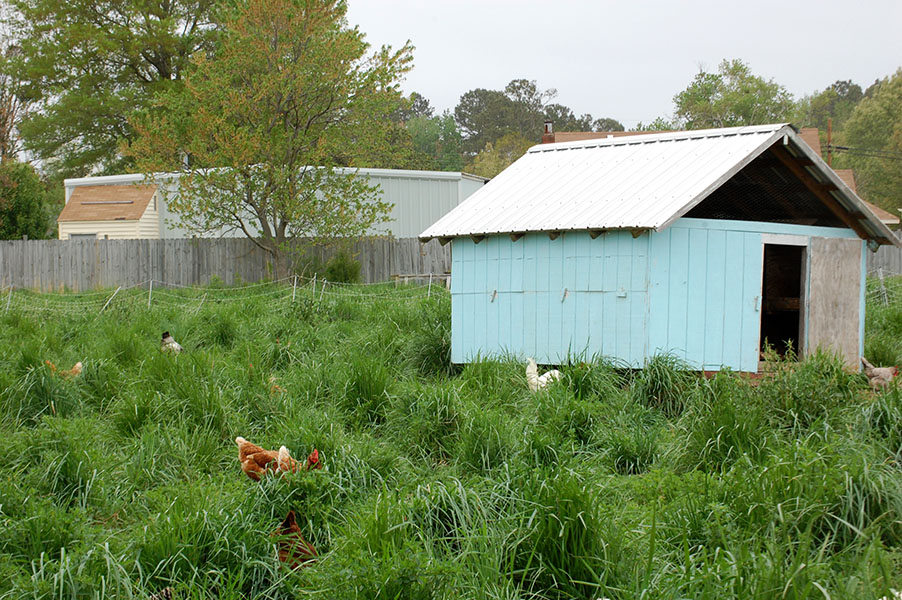
He then took the students on a tour of the farm including the crop rows, the chicken coops and the hoop houses. The hoop houses were a welcome relief from the cool temperatures. Kevin explained why they were warmer and about solarization. He noted that if it had been a sunny day they may have been as hot as 90 degrees inside. He showed the students where they started and raised seedlings to plant or sell for others to plant. The students truly enjoyed the chickens, and the crowing roosters. A chicken chase ensued to capture the escaped chickens but they outsmarted the children by flying back over the fence. They may try to escape but they know their way back home.


The tour ended with a seedling transfer exercise where the students separated delicate celeriac seedlings into larger pots. With small, agile hands they transplanted all the seedlings lightning fast! While it was nice to return to the warmth of the bus, the cooler temperatures and rain gave a taste of what farm life can be like when the work must be done despite the weather conditions. Kevin was very thorough and informative in his tour and lecture and the students were fortunate to see a working sustainable farm in action. The lessons they have learned all year about organic gardening, sustainability and environmental practices came together neatly in one afternoon. Thanks New Earth Farm!


Saturday, April 20, 2013

Tea Two Ways

At our last meeting the Green LIONS Garden Group made flavored water, or “fruit teas” with fresh fruits, vegetables, and herbs for a refreshing and delicious alternative to commercial artificially flavored and colored waters. Students made watermelon/rosemary, cucumber/mint, strawberry/lime/basil, and orange/lime flavors. The winner seemed to be the cucumber/mint which many students said tasted like mint chewing gum.


We then made compost tea from our worm bin, currently being hosted by Ms. Dickens 4th grade class. When water is poured through the bin, what comes out the bottom after running through the worm castings and soil is rich in nutrients and beneficial bacteria. This can be diluted and poured on the garden for a natural fertilizer. This practice closes the life cycle circle and helps the students learn how what grows in the garden can be composted to turn into a fertilizer to again return to the garden. A beautiful process that connects us to the natural world.


Spring Cleaning

In March and early April the Green LIONS Garden Group was busy preparing the garden for Spring by starting seeds, weeding and giving new plants and seeds homes in our garden beds.

We were excited to welcome Linkhorn Park parent Becky Devlin of Roost Flowers to a meeting in March. She talked with the students about the importance and benefit of having flowering plants in and around an edible garden. Not only do they attract pollinators to the garden helping the flowers of edible plants turn into vegetables and fruits, but they can also deter certain pests from invading the garden. Ms. Devlin helped the students start zinnias seeds in the courtyard greenhouse. Once the seedlings started to emerge, Ms. Manley’s 3rd grade class adopted the plants to grow stronger in the Grow Lab in their classroom. We look forward to planting them in the LIONS Garden when they’re ready.


Ms. Devlin raises beautiful flowers and herbs to beautify weddings and events using organic growing methods. You can learn more about her business at Roost Flowers.

Next we spent a meeting in the garden weeding the beds of residual plants and weeds from our fall planting. We removed the layer of leaf mulch that kept the beds warm over the winter and tucked it in around our blueberry bushes to help them grow stronger.

At this same meeting we made carrot seed tape to help plant our carrots without the need of thinning the plants later. We made a simple “glue” by boiling cornstarch with water and glued carrot seeds carefully spaced on paper towels. If the seeds germinate properly after planting the paper towel tape as a strip they will grow uncrowded and perfectly spaced, eliminating the usual task of thinning the carrot growth.


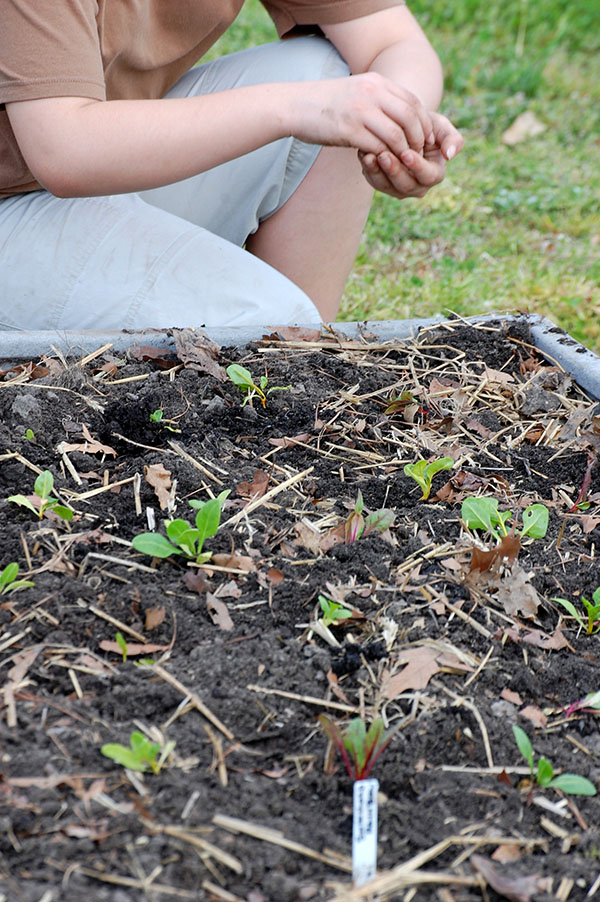
Now we were ready for a visit from Farmer John and to plant our garden beds with delicate spring vegetables and herbs. We amended our soil with compost giving it the equivalent of an energy drink with a huge vitamin boost. We planted some plants from seed and some as seedlings.

By seed, also known as direct sow, we planted sugar snap peas, turnips, potatoes, carrots, radishes, sunflowers, nasturtiums (edible flowers), mesclun mix (baby lettuces), spinach, one variety of lettuce, spring onions, cilantro and dill. As seedlings we planted lettuce, tatsoi, kale, arugula, chard, snapdragons, a variety of herbs including chervil, yarrow, thyme, lavender, mint, chives, and many more that I know I am forgetting. Visit the garden to see the wide variety of our vegetables, herbs, flowers, and our perennial strawberries already producing the white flowers that will soon become ripe, juicy strawberries. Yum!


Friday, March 8, 2013

Food Miles Over Carb Grams?

As a society first we counted the calories in our food, then fat grams, then carbohydrate grams. Now the miles our food has traveled is topping that list. At least it is at the top of the list for the students in the Green LIONS Garden Group. They are studying the importance of eating fruits, vegetables and other products grown and produced in season by local growers and producers. They are learning to ask questions such as: What was the last thing I ate? Who grew and harvested it or some of the ingredients in it? How does how it was grown or produced affect the earth? How many miles did it travel to reach the store where I bought it?

Students explored the 24 steps we determined it could take to bring pizza sauce to your house to make a pizza. The steps, written on cards, were shuffled and passed around a circle. Starting with the first step students tossed a ball of yarn around after holding to it when their number came up. The yarn formed a large entangled web showing the elaborate trip pizza sauce may take to your house.


We discussed how much smaller that web could become if we bought tomatoes from a local farmer and made the sauce ourselves. The students holding the steps that could be eliminated then let go showing a clear difference in the shrinkage of the web, an impactful example of how we have the power to make choices that matter in our food purchasing decisions.

Our current global food system provides us with an immense variety of foods any time of the year. Sadly this system also takes a toll on our environment, local economies, communities, farmers, consumers and how our food tastes. Food travels farther today more often and this makes us further and further removed from our food sources. What used to feel like having endless choices now feels like we have less and less control over what we eat and how it is grown.

Students learned about eating seasonally and how to make choices to only eat some foods when they’re in season. We divided up into four groups and created an Eating Seasonally and Locally display to hang in the school cafeteria for the whole student body to enjoy. They were also able to take home a Local Food Wheel to share with their families when they make food choices.


By choosing to eat locally and seasonally we gain a voice in our community about how our land gets used, what pollutants end up in our local waters and soils, and the physiological and economical health of our community. Locally grown, seasonal produce tastes better and is better for us because it is usually eaten sooner after harvest than food that has traveled 100s and 1000s of miles. Simply reducing the amount of fruits, vegetables, and other products grown or produced outside of our region we consume can make a significant impact on the health of our planet now and for years to come.

Print out your own complimentary Local Food Wheel as pictured below by going to our GLGG Files and opening both Local Food Wheel Pg 1 and Pg 2. Take it with you to the grocery store or farmer’s market to find fresh, seasonal produce.